The Nijo Castle or Nijo-jo in Japanese (二条城)literally ‘castle on street two’, is one of Kyoto's most spectacular buildings and a perfect example of the architecture of the palace castles of Edo-period Japan.
Nijo Castle was built in 1603 as the residence of the first shogun from the Edo period (1603-1867), Tokugawa Ieyasu and was used by the Tokugawa family ever since.
In 1867, when the shogunato and Japon was opened to the outside world, the castle was briefly used as an imperial palace until it was donated to the city and opened its doors.
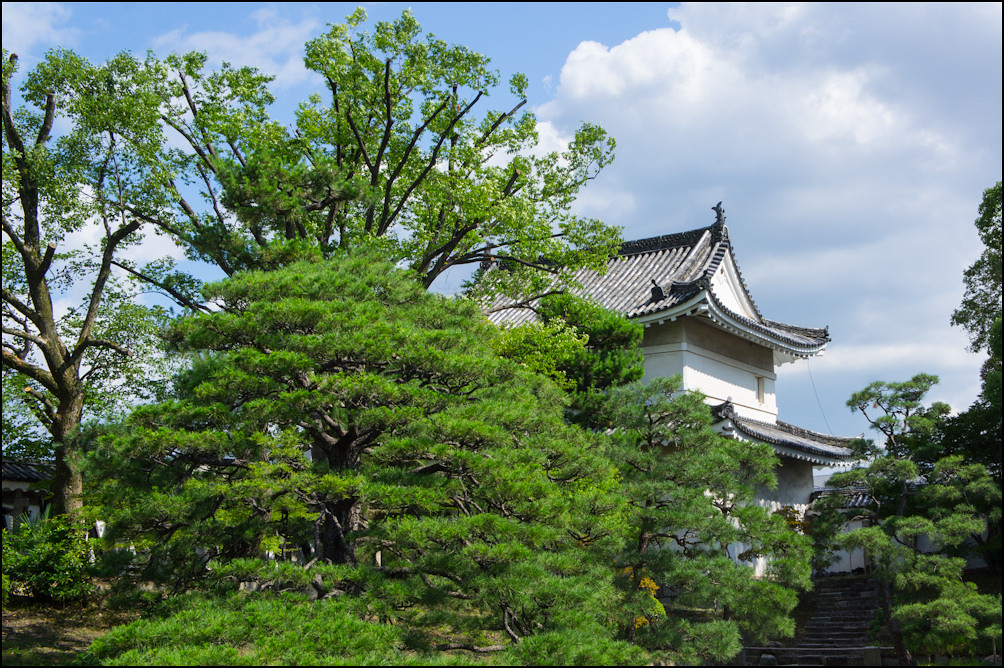
The main entrance to Nijo Castle is located to the east, from where you can access the impressive Karamon door,who was in rehabilitation until not too long ago.
This will take us to the entrance of the Ninomaru palace (literally, the second circle of defence), where the residence and offices of the shogun during his visits to Kyoto.
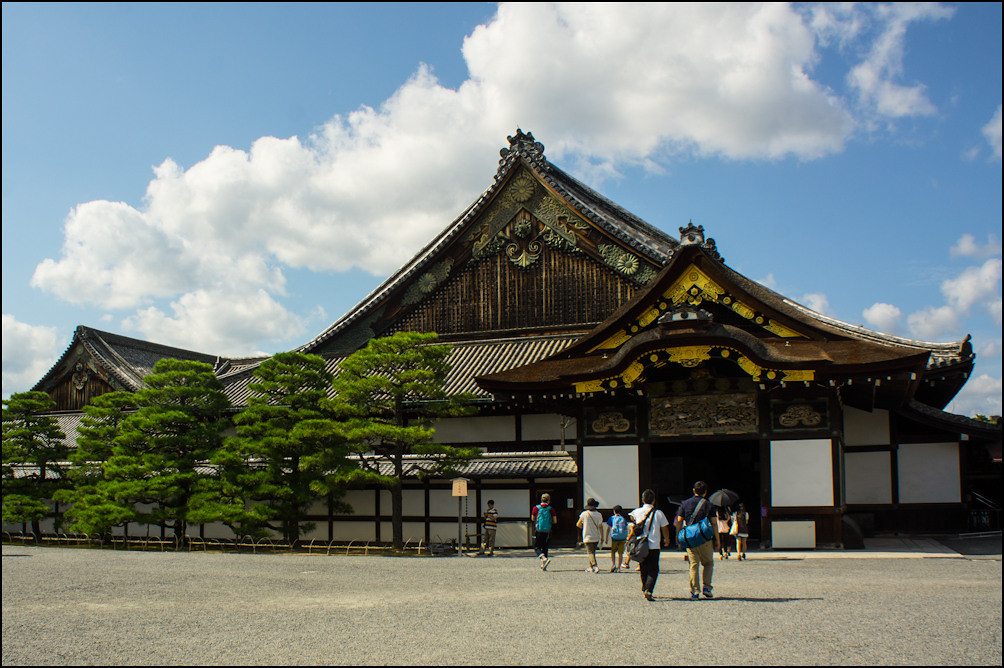
The main attraction of Ninomaru Palace are the tatami rooms, with beautifully decorated Japanese-style ceilings and sliding doors. But the star, of course, are the nightingale floors, the walls, which creak when you walk over them and which, in legendary stories, served as a security measure against unwanted visitors.
In reality, these floors were not intended to be like this when they were built, but over the years the nails loosened and the timbers wore out, and the noise as they moved when someone walked on them created that peculiar sound. The legend, as is often the case, is much more imaginative and interesting than the reality.
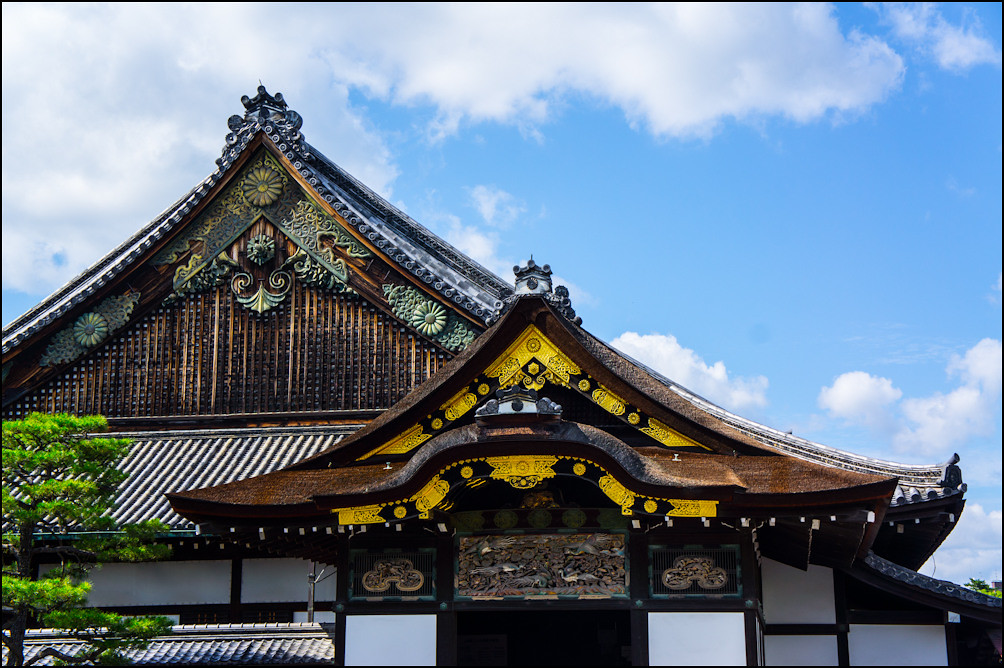
As we left the Ninomaru Palace, we met the Ninomaru garden, the traditional Japanese style and the area where it was formerly located. Honmaru Palace and the old keep, the castle was destroyed in a fire in the 18th century.
The building that we see today is the imperial residence of the Katsura Imperial Palace (also in Kyoto) which was moved to the Honmaru Palace area at the beginning of the Meiji Restoration. The Honmaru Palace It was closed to the public for 18 years for restoration work until it reopened its doors on 1 September 2024. It also has beautiful gardens.
The gardens surrounding the Ninomaru and Honmaru palaces have many different species of trees, making a visit perfect almost any time of the year.
For example, with its more than 400 cherry trees, the castle is a must-see during the cherry blossom season, and since it has an area dedicated to plum trees, it is also beautiful during the plum blossom season at the end of February. In addition, thanks to the presence of ginkgo and maple trees, the colours of the garden are spectacular in autumn with the changing of the leaves or the blossoming of the cherry trees or momiji.
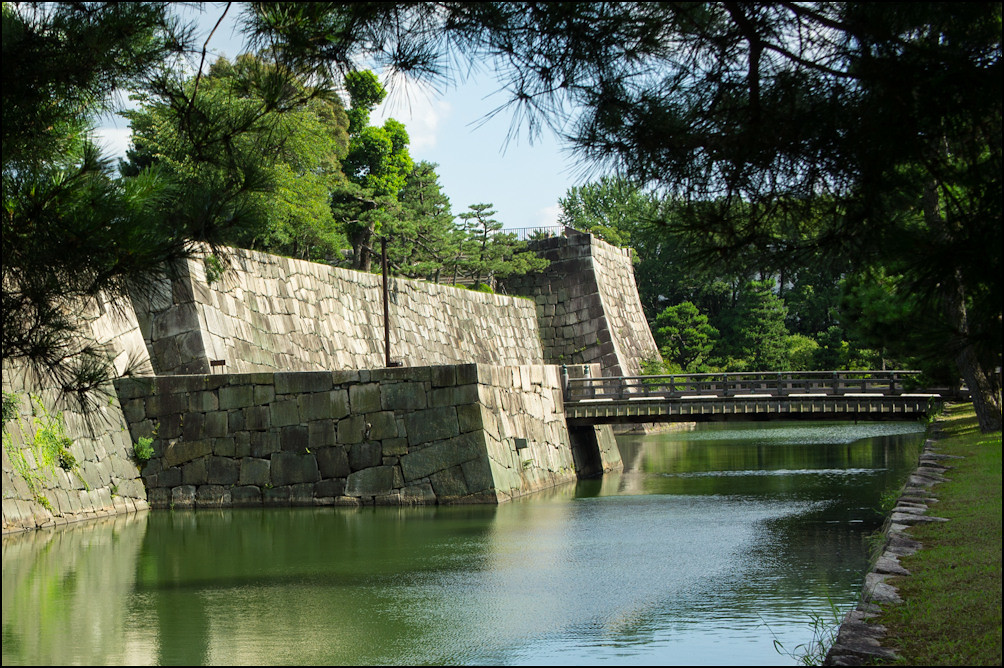
Nijo Castle is one of the 17 Ancient Kyoto Historical Monuments that received UNESCO World Heritage designation in 1994.
Sightseeing near Nijo Castle
You can take advantage of your visit to Kyoto Nijo Castle to see other attractions nearby:
- Imperial Palace and Kyoto Gyoen Park: Kyoto Gyoen Imperial Park and the Kyoto Imperial Palace are relatively close by.
- Buildings from the Meiji and Taisho periods. Around the Imperial Palace, as well as on Sanjo Street, there are many buildings with typical architecture from the late 19th and early 20th centuries.
- Go'o Shrine. This shrine filled with images of wild boars and feet is located opposite the Imperial Park and the Kyoto Imperial Palace, so you can easily visit both.
- Kyoto International Manga Museum: this museum, which opened in 2006, will delight all manga fans with its collection of more than 300,000 items.
Additional information
- The castle is open from 8.45am to 5pm (last entry allowed at 4pm) and is closed from 29th to 31st December. Check opening times and prices on the official website.
- Audio guides are available in English.
- It is forbidden to take photos inside Ninomaru Palace.
How to get to Nijo Castle
From Kyoto Station, take the Karasuma underground line to the Karasuma-Oike stop and then change to the Tozai underground line to the Nijojo-mae stop. Alternatively, you can also take bus no. 9, 12, 50 or 101 to Nijojo-mae stop.
 English (UK)
  Español
No responses yet